
The global brain cancer diagnostics market was valued at USD 4.10 billion in 2025 and is projected to reach USD 9.85 billion by 2034, according to DelveInsight's latest brain cancer diagnostics Market Insights report.
New York, USA, Nov. 19, 2026 (GLOBE NEWSWIRE) -- Brain Cancer Diagnostics Market to Register Immense Growth at a CAGR of ~10% by 2034 | DelveInsight
The global brain cancer diagnostics market was valued at USD 4.10 billion in 2025 and is projected to reach USD 9.85 billion by 2034, according to DelveInsight's latest brain cancer diagnostics Market Insights report.
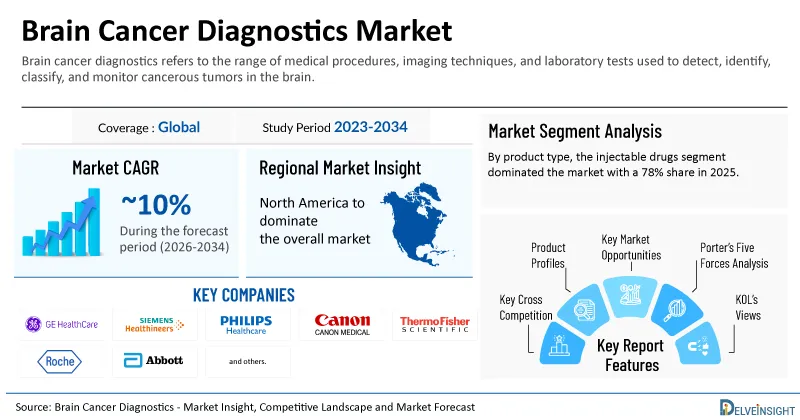
The market is expected to grow at a CAGR of 10.2% during the forecast period (2026–2034), driven by the rising incidence of primary and metastatic brain tumors, increasing adoption of advanced neuroimaging technologies, and growing demand for molecular and biomarker-based diagnostics. Imaging diagnostics accounted for 46% of the global market in 2025, making it the largest diagnostic segment, while glioblastoma represented 41% of the market by tumor type. North America dominated the global market with a 45% revenue share in 2025, whereas Asia-Pacific is anticipated to witness the fastest growth. Looking ahead, advancements in AI-assisted MRI and PET imaging, next-generation sequencing, liquid biopsy technologies, and biomarker-driven precision diagnostics are expected to shape the competitive landscape.
DelveInsight’s Brain Cancer Diagnostics Market Insights report provides the current and forecast market analysis, individual leading brain cancer diagnostics companies’ market shares, challenges, brain cancer diagnostics market drivers, barriers, trends, and key brain cancer diagnostics companies in the market.
Brain Cancer Diagnostics Market Summary
- 2025 Brain Cancer Diagnostics Market Size: USD 4.1 Billion
- 2034 Projected Brain Cancer Diagnostics Market Size: USD 9.8 Billion
- Brain Cancer Diagnostics Market Growth Rate (2026-2034): ~10%
- Largest Brain Cancer Diagnostics Market: North America
- Largest Diagnostic Type Segment: Imaging Diagnostics Category (46%)
- Largest Cancer/Tumor Segment: Glioblastoma (41%)
- Largest Biomarker Segment: IDH Mutation Category (29%)
- Fastest-growing Region: Asia-Pacific (as projected)
- Key Companies in the Brain Cancer Diagnostics Market: GE HealthCare, Siemens Healthineers, Philips Healthcare, Canon Medical Systems, Thermo Fisher Scientific, F. Hoffmann-La Roche, Illumina, QIAGEN, Agilent Technologies, Abbott Laboratories, and others.
Source: DelveInsight, Brain Cancer Diagnostics Market Insights, Competitive Landscape, and Market Forecast – 2034.
Market estimates are based on DelveInsight's research and forecasting methodology.
Request a free sample page to know the full forecast of the brain cancer diagnostics market @ https://www.delveinsight.com/report-store/brain-cancer-diagnostics-market
Himanshu Agnihotri, Project Manager of Healthcare Consulting at DelveInsight, said that the emergence of liquid biopsy, AI-powered imaging analysis, and advanced biomarker-based testing is creating new opportunities for early diagnosis and personalized treatment planning. Increasing investments in oncology research, expanding healthcare infrastructure, and growing demand for minimally invasive diagnostic approaches are expected to further accelerate market growth during the forecast period.
Key Factors Contributing to the Rise in Growth of the Brain Cancer Diagnostics Market
- Increasing Prevalence of Brain Cancer: The rising incidence of brain tumors, including glioblastoma, meningioma, and other malignant brain cancers, is increasing the demand for advanced diagnostic solutions. Growing awareness of neurological malignancies and the need for early diagnosis are supporting market expansion.
- Advancements in Diagnostic Imaging Technologies: Continuous advancements in magnetic resonance imaging (MRI), computed tomography (CT), positron emission tomography (PET), and functional imaging technologies are improving the accuracy of brain cancer detection. Enhanced imaging capabilities enable better tumor localization, characterization, and treatment planning.
- Growing Adoption of Molecular and Genetic Diagnostics: Increasing utilization of molecular profiling, next-generation sequencing (NGS), and biomarker-based diagnostic techniques is supporting precise brain cancer classification. These technologies help identify genetic alterations, facilitate personalized treatment selection, and improve diagnostic decision-making.
- Increasing Focus on Early Diagnosis and Precision Medicine: Greater emphasis on early detection and personalized oncology approaches is encouraging the adoption of advanced brain cancer diagnostic technologies. Accurate identification of tumor subtypes and molecular characteristics enables clinicians to develop more targeted and effective treatment strategies.
- Rising Investments in Brain Cancer Research: Increasing investments by pharmaceutical companies, biotechnology firms, academic institutions, and government organizations in brain cancer research are accelerating the development of innovative diagnostic solutions. Research initiatives focused on tumor biomarkers, liquid biopsies, and advanced imaging are further supporting market growth.
- Growing Demand for Minimally Invasive Diagnostic Approaches: The development of liquid biopsy technologies and cerebrospinal fluid (CSF)-based biomarker testing is creating opportunities for less invasive brain cancer diagnostics. These approaches may complement conventional tissue biopsies and support disease monitoring, recurrence detection, and treatment response assessment.
- Increasing Healthcare Infrastructure and Diagnostic Accessibility: Expanding healthcare infrastructure, particularly in emerging economies, is improving access to advanced neuroimaging and specialized diagnostic services. Investments in modern diagnostic equipment and specialized cancer centers are contributing to the wider adoption of brain cancer diagnostic technologies.
- Integration of Artificial Intelligence in Brain Cancer Diagnostics: The integration of artificial intelligence (AI) and machine learning into diagnostic imaging workflows is improving tumor detection, segmentation, and classification. AI-powered diagnostic tools can assist radiologists in interpreting complex imaging data, enhancing diagnostic efficiency and supporting clinical decision-making.
- Rising Incidence of Neurological Disorders and Aging Population: The growing elderly population and increasing burden of neurological conditions are contributing to greater utilization of advanced neurological diagnostic services. This trend is supporting investments in diagnostic technologies capable of identifying and differentiating brain tumors from other neurological abnormalities.
- Expansion of Clinical Trials and Oncology Diagnostic Partnerships: Increasing clinical trials focused on novel brain cancer therapies are driving demand for advanced diagnostic testing, molecular profiling, and patient stratification. Collaborations among diagnostic companies, research institutions, and pharmaceutical developers are accelerating innovation and commercialization of new diagnostic solutions.
Get a sneak peek at the brain cancer diagnostics market dynamics @ Brain Cancer Diagnostics Market Trends
Regional Brain Cancer Diagnostics Market Insights
North America Brain Cancer Diagnostics Market Analysis
- North America held the largest share of the global brain cancer diagnostics market in 2025, accounting for 45% of total revenue.
- The region's leading position is supported by its well-established neuro-oncology infrastructure, extensive utilization of advanced MRI and PET imaging technologies, early adoption of the WHO CNS5 molecular classification in clinical practice, and well-defined FDA regulatory pathways for companion diagnostics, particularly in the United States.
- North America encompasses a substantial network of academic neuro-oncology institutions and molecular pathology laboratories, while healthcare providers benefit from proximity to leading imaging equipment manufacturers and molecular diagnostics companies headquartered in the region.
- The introduction of biomarker-associated therapies, including vorasidenib, alongside a robust clinical development pipeline in glioma and increasing adoption of precision oncology, is generating significant demand for advanced diagnostic testing.
- Furthermore, substantial investments in AI-powered imaging technologies, expanding next-generation sequencing capabilities, favorable reimbursement mechanisms, and regulatory certainty are expected to reinforce the region's market leadership throughout the forecast period.
Europe Brain Cancer Diagnostics Market Analysis
- Europe accounted for a significant share of the global brain cancer diagnostics market in 2025, supported by its well-established healthcare infrastructure, strong neuro-oncology research capabilities, and widespread adoption of advanced diagnostic imaging and molecular testing technologies.
- The region's market growth is driven by increasing utilization of MRI, PET, and advanced neuroimaging techniques, alongside expanding access to molecular diagnostics and next-generation sequencing (NGS) for brain tumor characterization.
- Countries such as Germany, the United Kingdom, France, Italy, and Spain maintain established neuro-oncology centers and academic research networks, facilitating the integration of advanced diagnostic technologies into clinical practice.
- Furthermore, the implementation of WHO CNS5 classification guidelines, increasing emphasis on molecular profiling of gliomas, and growing adoption of precision oncology approaches are strengthening demand for comprehensive brain cancer diagnostic solutions.
- The presence of leading diagnostic technology manufacturers, favorable research funding initiatives, and collaborative European oncology research programs are further supporting market development.
- Additionally, investments in AI-powered neuroimaging, digital pathology, and biomarker-based diagnostic platforms are expected to enhance diagnostic accuracy and support continued market expansion throughout the forecast period.
Asia-Pacific Brain Cancer Diagnostics Market Analysis
- Asia-Pacific is projected to register the fastest growth in the brain cancer diagnostics market over the forecast period.
- This expansion is driven by increasing brain tumor prevalence, rapid development of advanced diagnostic imaging infrastructure, and rising healthcare expenditure across China, Japan, India, South Korea, and Australia.
- China is strengthening its MRI and PET-CT infrastructure while expanding domestic molecular diagnostics manufacturing capabilities, whereas Japan is accelerating the adoption of AI-enabled neuroimaging solutions.
- India is improving access to cost-effective NGS-based tumor profiling, while South Korea and Australia are advancing academic neuro-oncology research and expanding biomarker testing networks.
- Increasing government healthcare spending, a growing oncology patient population, and greater domestic manufacturing of imaging and molecular diagnostic technologies are further supporting regional market expansion.
- Collectively, the rising disease burden, continued infrastructure development, and increasing penetration of molecular diagnostics position Asia-Pacific as a major contributor to incremental market growth during the forecast period.
To know more about why North America is leading the market growth in the brain cancer diagnostics market, get a snapshot of the Brain Cancer Diagnostics Market Analysis
Recent Developmental Activities in the Brain Cancer Diagnostics Market
- In 2026, GE HealthCare advanced its next-generation SIGNA MR platform for neuroscience and neuro-oncology research, including a helium-free 1.5T MRI installation supporting brain imaging research collaborations.
- In 2026, GE HealthCare highlighted MIM LesionID Pro, an FDA-cleared AI tool for automated whole-body tumor burden analysis, and MIM KineticID, a 510(k)-pending dynamic PET imaging and kinetic modeling software, at industry nuclear medicine conferences.
- In 2026, Siemens Healthineers launched its Brain Health Research Portfolio, introducing its first research-use-only biomarker assays designed to help generate evidence on neurological disease progression and function.
What is Brain Cancer Diagnostics?
Brain cancer diagnostics refers to the range of medical procedures, imaging techniques, and laboratory tests used to detect, identify, classify, and monitor cancerous tumors in the brain. These diagnostic approaches play a critical role in determining tumor location, size, type, grade, and extent of progression, enabling clinicians to develop appropriate treatment strategies. Brain cancer diagnosis typically involves advanced imaging technologies, including magnetic resonance imaging (MRI), computed tomography (CT), and positron emission tomography (PET), which help visualize abnormal brain structures and assess tumor characteristics. Additionally, neurological examinations, tissue biopsy, histopathological analysis, molecular testing, and emerging liquid biopsy techniques are increasingly utilized to improve diagnostic accuracy and support personalized treatment decisions. Growing advancements in artificial intelligence (AI)-based imaging analysis, precision diagnostics, and molecular profiling are further enhancing early detection capabilities and contributing to the evolution of brain cancer diagnostics.
| Brain Cancer Diagnostics Market Report Metrics | Details |
| Coverage | Global |
| Study Period | 2023–2034 |
| Brain Cancer Diagnostics Market CAGR | ~10% |
| Brain Cancer Diagnostics Market Size by 2034 | USD 9.8 Billion |
| Key Brain Cancer Diagnostics Companies | GE HealthCare, Siemens Healthineers, Philips Healthcare, Canon Medical Systems, Thermo Fisher Scientific, F. Hoffmann-La Roche, Illumina, QIAGEN, Agilent Technologies, Abbott Laboratories, and others |
Brain Cancer Diagnostics Market Assessment
- Brain Cancer Diagnostics Market Segmentation
- Brain Cancer Diagnostics Market Segmentation By Diagnostic Type: Imaging Diagnostics, Tissue-Based Diagnostics, Molecular Diagnostics, Liquid Biopsy & Biomarker Diagnostics
- Brain Cancer Diagnostics Market Segmentation By Cancer/Tumor Type: Glioblastoma, Astrocytoma, Oligodendroglioma, Ependymoma, and Others
- Brain Cancer Diagnostics Market Segmentation By Biomarkers: IDH Mutation, MGMT Promoter Methylation, 1p/19q Codeletion, TERT Promoter Mutation, EGFR Alterations, ATRX Alterations
- Brain Cancer Diagnostics Market Segmentation By End-User: Hospitals, Diagnostic Imaging Centers, Pathology & Diagnostic Laboratories, Cancer Research Institutes, and Others
- Brain Cancer Diagnostics Market Segmentation By Geography: North America, Europe, Asia-Pacific, and Rest of World
- Porter’s Five Forces Analysis, Product Profiles, Case Studies, KOL’s Views, Analyst’s View
Which MedTech key players in the brain cancer diagnostics market are set to emerge as the trendsetter explore @ Brain Cancer Diagnostics Market Size
Table of Contents
| 1 | Brain Cancer Diagnostics Market Report Introduction |
| 2 | Brain Cancer Diagnostics Market Executive Summary |
| 3 | Brain Cancer Diagnostics Market Key Factors Analysis |
| 4 | Impact Analysis |
| 5 | Regulatory Analysis |
| 6 | Brain Cancer Diagnostics Market Porter’s Five Forces Analysis |
| 7 | Brain Cancer Diagnostics Market Assessment |
| 8 | Competitive Landscape |
| 9 | Startup Funding & Investment Trends |
| 10 | Brain Cancer Diagnostics Market Company and Product Profiles |
| 11 | KOL Views |
| 12 | Project Approach |
| 13 | About DelveInsight |
| 14 | Disclaimer & Contact Us |
Interested in knowing the brain cancer diagnostics market share by 2034? Click to get a snapshot of the Top Brain Cancer Diagnostics Companies
Related Reports
Brain Cancer Market Insights, Epidemiology, and Market Forecast – 2036 report delivers an in-depth understanding of the disease, historical and forecasted epidemiology, as well as the market trends, market drivers, market barriers, and key brain cancer companies, including Y-mAbs Therapeutics Inc., Shimadzu Corporation, Bristol-Myers Squibb, Bayer AG, AstraZeneca plc, Johnson & Johnson Inc., Merck & Co., Pfizer Inc., F. Hoffmann-La Roche Ltd, Dr. Reddy's Laboratories Ltd, and others.
Glioblastoma Market Insights, Epidemiology, and Market Forecast – 2036 report delivers an in-depth understanding of the disease, historical and forecasted epidemiology, as well as the market trends, market drivers, market barriers, and key glioblastoma companies, including Laminar Pharmaceuticals, BioMimetix, Enterome, Genenta Science, Medicenna Therapeutics, Bayer, Chimerix, Aivita Biomedical, Denovo Biopharma, Northwest Biotherapeutics, MedImmune, DNAtrix, Imvax, MimiVax, CNS Pharmaceuticals, Oblato, Enterome, VBI Vaccines, and others.
Diagnostic Imaging Equipment Market Insights, Competitive Landscape, and Market Forecast – 2034 report delivers an in-depth understanding of the market trends, market drivers, market barriers, and key diagnostic imaging equipment companies, including Siemens Healthineers, GE Healthcare, Philips Healthcare, Canon Medical Systems Corporation, Hitachi Medical Systems, Hologic, Inc., Shimadzu Corporation, Fujifilm Medical Systems, Carestream Health, Agfa-Gevaert Group, Esaote SpA, Samsung Healthcare, Toshiba Medical Systems Corporation (now part of Canon Medical Systems), Konica Minolta Healthcare, Varian Medical Systems, Ziehm Imaging GmbH, Mindray Medical International Limited, Planmed Oy, Analogic Corporation, Neusoft Medical Systems Co., Ltd., and others.
Molecular Diagnostics Market Insights, Competitive Landscape, and Market Forecast – 2034 report delivers an in-depth understanding of the market trends, market drivers, market barriers, and key molecular diagnostics companies, including F. Hoffmann-La Roche Ltd, Hologic Inc., bioMerieux SA, Abbott Laboratories, QIAGEN N.V., Becton, Dickinson and Company, Thermo Fisher Scientific Inc., Siemens Healthineers AG, Danaher Corporation, and Myriad Genetics Inc. Additional participants including Agilent Technologies Inc., Illumina Inc., DiaSorin Inc., Exact Sciences Corporation, MDxHealth, Genetic Signatures, Biocartis, Amoy Diagnostics Co. Ltd., Molbio Diagnostics Pvt. Ltd., Savyon Diagnostics, and others.
Biomarkers Market Insights, Competitive Landscape, and Market Forecast – 2034 report delivers an in-depth understanding of the market trends, market drivers, market barriers, and key biomarkers companies, including F. Hoffmann-La Roche Ltd, Merck KGaA, Quibim, Quanterix, Abbott, QIAGEN, Revvity, Laboratory Corporation of America® Holdings, Charles River Laboratories., Bio-Rad Laboratories, Inc., Eurofins Scientific, BIOMÉRIEUX, Agilent Technologies, Inc., JSR Life Sciences, LLC, MESO SCALE DIAGNOSTICS, LLC., EKF Diagnostics, Celerion, Standard BioTools™, R-Biopharm AG, StressMarq Biosciences Inc., and others.
About DelveInsight
DelveInsight is a leading Business Consultant and Market Research firm focused exclusively on life sciences. It supports pharma companies by providing comprehensive end-to-end solutions to improve their performance. Get hassle-free access to all the healthcare and pharma market research reports through our subscription-based platform PharmDelve.
CONTACT: Contact Us

Shruti Thakur

info@delveinsight.com

+14699457679






Comments (0)
Login to join the conversation
Login / RegisterNo comments yet. Be the first to comment!